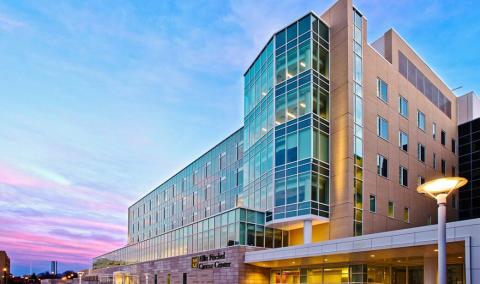

As Missouri’s only state-designated cancer center, Ellis Fischel Cancer Center is on a mission to advance cancer care and prevention through exemplary care, research and education.
Caring for over 30,000 individuals throughout the state of Missouri each year, our experts use the most advanced technology and conduct leading-edge research to offer the safest, most effective treatment options. And because prevention is a key part of advancing cancer care, Ellis Fischel offers a variety of screening options and tools to help patients identify and manage their personal risks for cancer.
Cancer Care
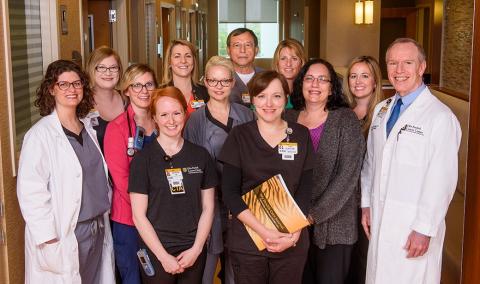
With our doctors and researchers working together as a team, we're on the forefront of medical breakthroughs, giving you the comfort of knowing you're getting the advanced care you need.
As part of our commitment to providing the safest, most effective care possible, we've created specialized teams for each type of cancer so that when you need care, we're able to create and start a fully personalized treatment plan right away.
MU Health Care cancer experts specialize in treating many types of cancer.
- Blood cancer
- Brain cancer
- Breast cancer
- Colon cancer
- Colorectal cancer
- Gastrointestinal and pancreatic cancer
- Gynecologic cancer
- Head and neck cancer
- Lung cancer
- Sarcomas
- Skin cancer and melanoma
- Urologic cancer
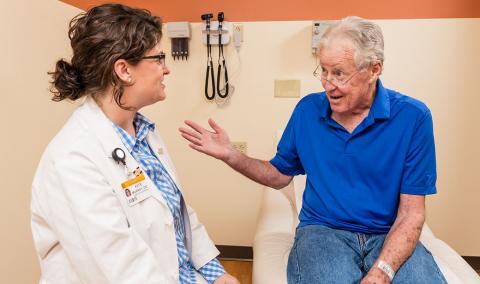
By bringing together a variety of specialists, including surgical, medical and radiation oncologists as well as oncology nurses, patient navigators, nutritionists and rehabilitation therapists, we're able to offer you a full spectrum of care throughout treatment and recovery.
Ellis Fischel is accredited as an Academic Comprehensive Cancer Program by the Commission on Cancer, an American College of Surgeons quality program that recognizes health systems for ensuring their patients receive high-quality, coordinated care.
The latest advancement in cancer treatment at MU Health Care’s Ellis Fischel Cancer Center uses an artificial intelligence (AI) therapy system called Ethos™. Designed by Varian, a Siemens Healthineers company, the Ethos™ AI system increases the capability, flexibility and efficiency of radiotherapy by efficiently delivering an entire adaptive treatment within a timeslot comparable to standard treatment.
Unlike traditional radiotherapy treatment methods, Ethos™ can modify a patient’s treatment plan based on tumor and anatomical changes, allowing it to better target tumors, reduce dose to healthy tissue, help spare at-risk organs, potentially reduce toxicity, and overall improve outcomes for patients.
The implementation of Ethos™ therapy system at Ellis is the latest example of MU Health Care’s commitment to advance treatments for patients and improve the overall health and well-being of the communities it serves.
Cancer Screening
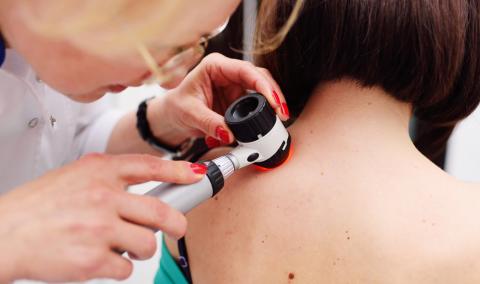
At Ellis Fischel Cancer Center, we believe that routine cancer screening is our No. 1 tool to prevent disease. By detecting cancer early when it's most treatable, we can offer the best treatment options and get you back to your life more quickly.
Learn more about our cancer screening services.
Download our Cancer Screening Guide
Cancer Research and Clinical Trials
We believe research and innovation are critical to the advancement of cancer care, which is why Ellis Fischel and its researchers are committed to the relentless pursuit of better treatments and cures.
Our experts are actively engaged in research that is advancing standards of care for cancer treatment, and we are enrolling patients in dozens of clinical trials that will help save lives and benefit countless other cancer patients in the future.
Past and present clinical trials have included treatment, prevention, screening and supportive/palliative care studies. If you’re interested in participating in a clinical trial, talk to your doctor or click below to learn more.
Learn more about cancer care research.